Rodin Museum

Paris
18.02.2026
Crédit photos : Pascal.vo

A well-honed logistics operation at the Rodin Museum

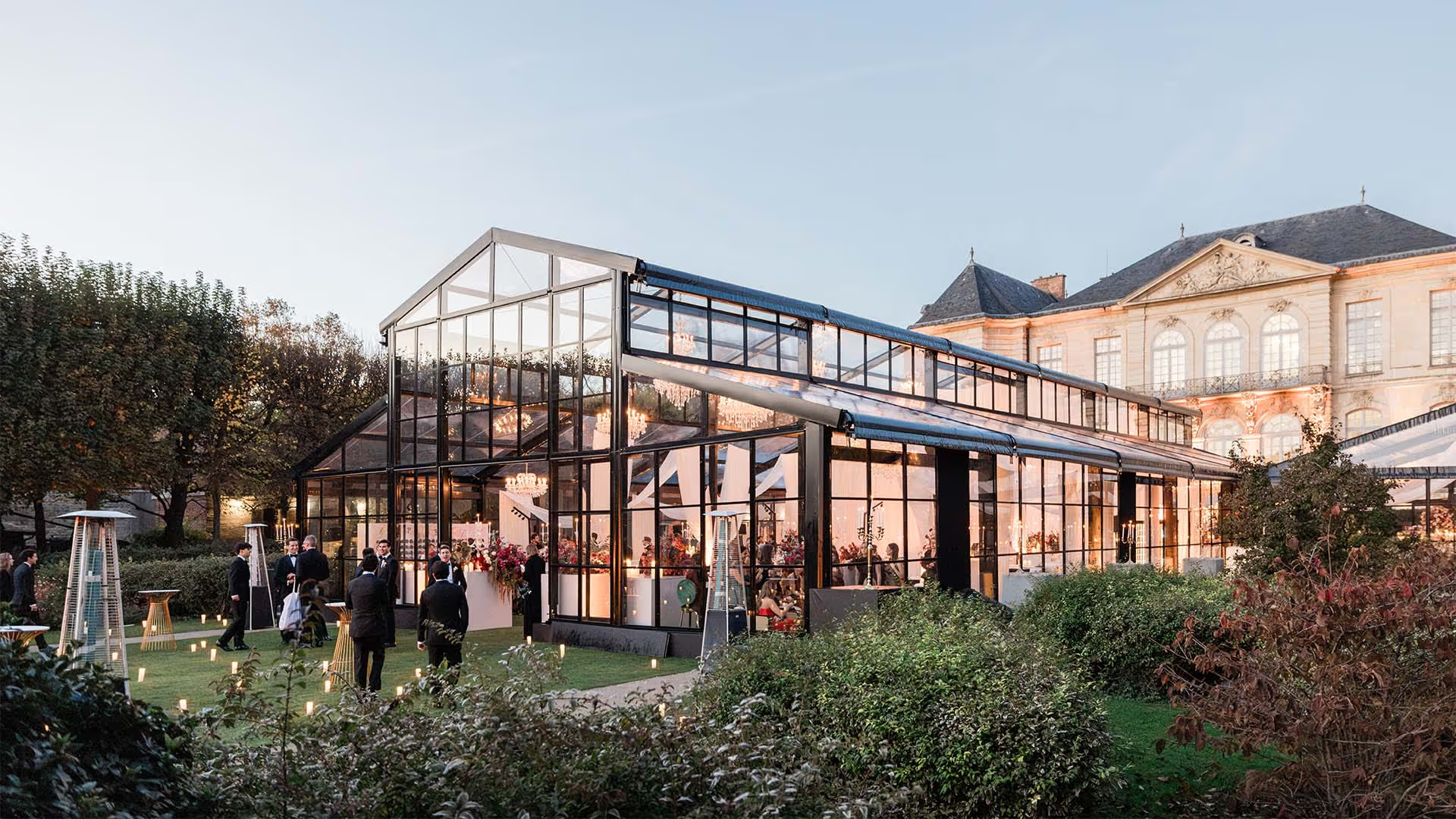
At the heart of the gardens of the Rodin Museum in Paris, this project reached an exceptional scale through the scope of its architectural deployment. Facing the museum, a 450 sqm Green house Grand Palais was installed as the centrepiece of the reception. Fully glazed, it offered a direct visual dialogue with the listed surroundings while structuring the space with clarity and precision. Its generous volume allowed the key moments of the evening to unfold within a striking setting, without ever competing with the historic architecture of the site.

On either side, two 150 sqm Blackline verrières balanced the composition. Their black steel frames introduced a more graphic language, defining clearly legible secondary volumes dedicated to welcome areas and circulation. This precise arrangement created a true open air architectural scenography, conceived as a dialogue between transparency, perspective and nocturnal staging.

Beyond its visual impact, this installation reflects complete logistical mastery. Working within a sensitive site, coordinating volumes, managing guest flows and respecting the museum environment informed every decision. Here, the structure does more than shelter an event. It organises, prioritises and reveals the site, transforming the gardens of the Rodin Museum into an exceptional reception space that is controlled, fluid and distinctly spectacular.

At the heart of the gardens of the Rodin Museum in Paris, this project reached an exceptional scale through the scope of its architectural deployment. Facing the museum, a 450 sqm Green house Grand Palais was installed as the centrepiece of the reception. Fully glazed, it offered a direct visual dialogue with the listed surroundings while structuring the space with clarity and precision. Its generous volume allowed the key moments of the evening to unfold within a striking setting, without ever competing with the historic architecture of the site.

On either side, two 150 sqm Blackline verrières balanced the composition. Their black steel frames introduced a more graphic language, defining clearly legible secondary volumes dedicated to welcome areas and circulation. This precise arrangement created a true open air architectural scenography, conceived as a dialogue between transparency, perspective and nocturnal staging.

Beyond its visual impact, this installation reflects complete logistical mastery. Working within a sensitive site, coordinating volumes, managing guest flows and respecting the museum environment informed every decision. Here, the structure does more than shelter an event. It organises, prioritises and reveals the site, transforming the gardens of the Rodin Museum into an exceptional reception space that is controlled, fluid and distinctly spectacular.